The uptake in fully-electric vans has been slow in Ireland. And there is no mystery behind it – the charging infrastructure continues to be inadequate for delivery fleets, while some manufacturers have stuck ludicrous price tags on their electric vans.
Lagging technological has also played a part. Many brands will sell you an electric van that is based on a combustion engine conversion, rather than a dedicated electric vehicle platform. The latter approach ensures a more future-ready offering, with better range, charging speeds and customisation at hand.
Unfortunately, manufacturers have been slow to adopt. The most recent sales figures back this up, as nine in 10 new vans sold so far this year are diesel.
It is not all doom and gloom for Ireland’s electric van market, however, as invariably the Chinese have arrived to keep the legacy brands on their toes.
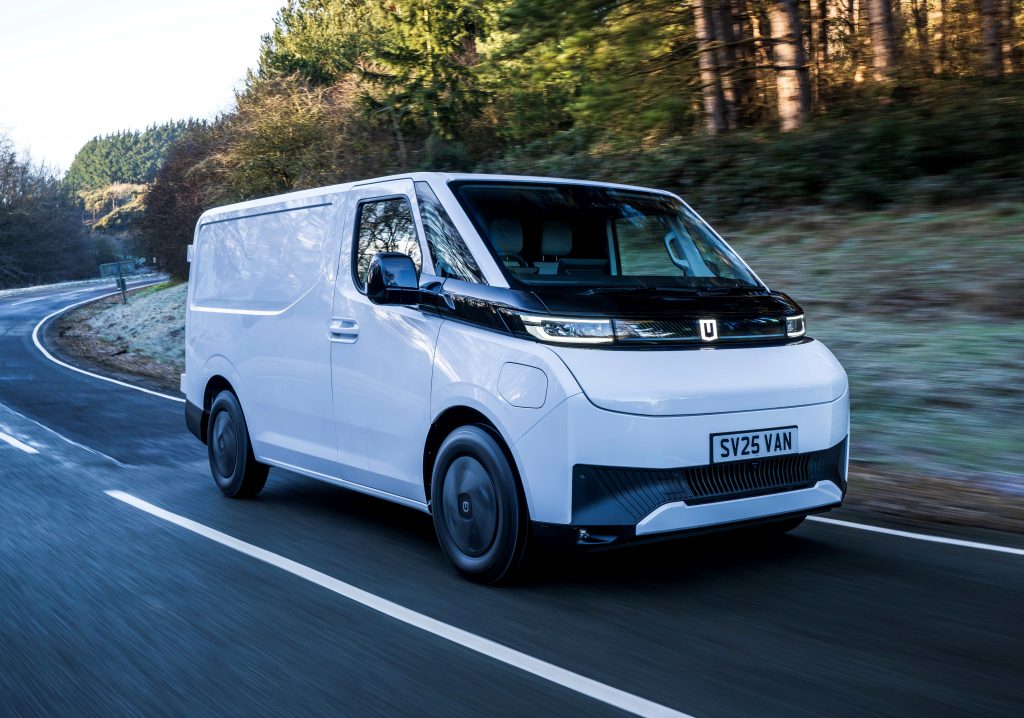
Farizon Auto, the commercial vehicle arm of Geely, the company that already owns the likes of Volvo and Lotus, has brought its new SV electric van to Ireland, with three size variants on offer.
Built from the ground up as a pure electric van, the Farizon SV is one businesses and fleet operators should seriously consider.
The key stats are: It has a maximum payload of up to 1,350kg, a cargo capacity of up to 13m3, a low 550 mm loading height, optional 270-degree rear doors and a real-time payload monitoring system.
It is available in L1H1, L2H2, and L3H3 variants and comes with a choice of 67kWh, 83kWh, or 106kWh batteries with a claimed range of up to 397km.
Tested here was the 83kWh L1H1 model, of which comfortably managed a round trip down to Cobh with only a couple of brief charging stops required overall. The SV retains its range extremely well on national roads, and with a 140kW DC charging speed, it can be back on the road after a 20 minute stop.
Priced from €47,000 (net of taxes and grant) and with a 4,990 mm length, 1,980 mm height, and 6.95m3 of load volume, this particular version of the Farizon SV is probably the sweet spot in the range.
Admittedly, it is by no means cheap, but it does undercut Ford’s electric Transit range.
All versions are powered by a 170 kW (231 PS) electric motor producing 336 Nm of torque. Spec is also the same across the range – just pick your wheelbase and battery size. Every Farizon SV comes with a five-year / 200,000 km vehicle warranty and an eight-year / 200,000 km battery warranty.
A USP of the Farizon SV is the pillarless design on the passenger side which creates an even wider side opening to make loading and unloading easier. This also allows for a great deal more customisation for van fit-outs and conversions.
Inside features a 12.3-inch floating touchscreen (with wireless Apple CarPlay), seven-inch digital instrument cluster, a bank of physical buttons and heated, ventilated driver’s seat. A downside to the interior is its lack of storage solutions. There is no secure storage for a laptop or paperwork, for example, while the slide-out cup holders are flimsy and never felt secure during my time with it.
That said, I was quite impressed by the Farizon SV – it looks cool and is nice to drive. We don’t have a huge choice of purpose built electric vans on this island, so it is a welcome addition.